
Why Mainory exists
Mainory began where two very different careers turned out to be asking the same question.
Daria had spent eighteen years as a child and family psychologist, most of them watching something that never stopped being remarkable: a child who could not be reasoned out of a fear would walk straight through it inside a story. Not because the story explained anything, but because she lived it beside a hero she recognised as herself. Fairy-tale therapy is a serious instrument, and Daria had used it for years — in her own practice, in groups, and with parents trying to understand their children. Its one limitation was arithmetic. A tale made for one particular child takes a trained person hours to write, and there is only one of her.
Dmytro had spent twenty years building software — for Silicon Valley startups and for some of the largest companies in the world — and had long since concluded that the technology is rarely the hard part. He also had children, and could not find for them the thing he wanted to exist: not another library of stories about children in general, but a story made for one child in particular, and made well.
Mainory is those two facts put together.
Every tale begins with a questionnaire built on child-psychology methodology rather than on our intuition, and every story makes your child the hero — because children take a message to heart when the brave one in the story is them. We add warm illustrations, gentle narration, and, if you like, a printed book to hold at bedtime. Tales are created directly in English, Spanish, Ukrainian or Russian, never translated into them.
We are not therapy and we do not replace it. If your child needs a specialist, please find one. What we are is the half hour before sleep you already spend together, made to do a little more work than it did last night.
The people behind Mainory
Mainory is two people. Between them: eighteen years of clinical practice, twenty years of building software, and one shared conviction about what a story can do.
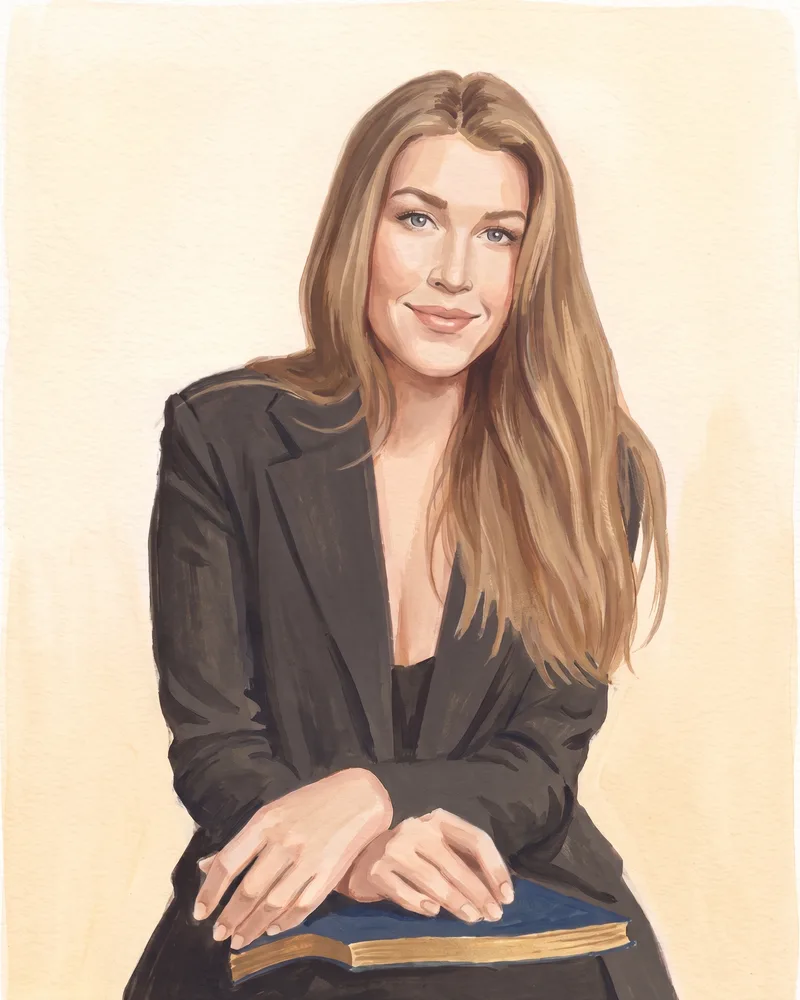
Daria Kunchenko
Co-founder · Child psychologist
Daria does not think of a fairy tale as a way to keep a child entertained.
For her it is one of the oldest languages the human psyche has — a carrier of collective wisdom, passed from one generation to the next long before psychology existed as a discipline. That is why children respond to stories so naturally. A child does not simply follow a plot; she lives it alongside the hero.
When the hero meets fear, loneliness, loss, unfairness or the unknown, the child walks that road with him without being told she is doing it. She identifies with the character, arrives at her own answers, absorbs what she has learned and finds resources she did not know she had. It is why a well-made tale does more than soothe or instruct — it can quietly rearrange a child's inner world. In Jungian work the language is symbols, and a story is the most natural form in which a child's psyche will accept, examine and transform an experience.
Her love of tales came long before the profession did. As a child, when things were hard, she learned to take shelter in her own imagination — going to bed early on purpose, to have more time to invent. Before sleep she lived whole stories: impossible adventures, worlds of her own, difficulties overcome beside her own heroes. Books joined that world soon after, and she read enormously; each one a separate life she could live without leaving the room. What she had found, without knowing its name, was what a narrative can do — how a story steadies a person and carries them through a difficult stretch. That is what eventually led her to fairy-tale therapy.
She has worked with children, adults and families for more than eighteen years, over ten of them with children. She is a Jungian psychotherapist and a child and family psychologist, a candidate on the international training programme for Jungian analysts (UJA/IAAP), and the founder of the Fulfilling Life centre for child and family psychology, open since 2016. Her practice brings together Jung's analytical psychology, fairy-tale therapy, sand therapy and therapeutic play. She has authored and co-authored research in Ukrainian and international journals, co-created the psychological game Power Inside, and teaches other psychologists.
The professional memory she holds most dearly is a tale she wrote for her own son. At around three he had a dangerous habit of bolting from adults in crowded places, with no fear at all of being lost; explaining, asking and warning made almost no difference. So she wrote him a story about a small rabbit called Taksik. Through the adventures of a hero he recognised immediately, the two of them lived the experience symbolically — and a sense of safety and responsibility took hold far more gently than any instruction had managed. Before long, the behaviour began to change.
That is the conviction Mainory is built on: a story made properly can reach a child where explanations do not. Daria wants every child to be able to find courage, hope and their own inner resources inside a story — and psychologists, teachers and parents to have a serious instrument that joins the depth of analytical psychology to the power of a tale.
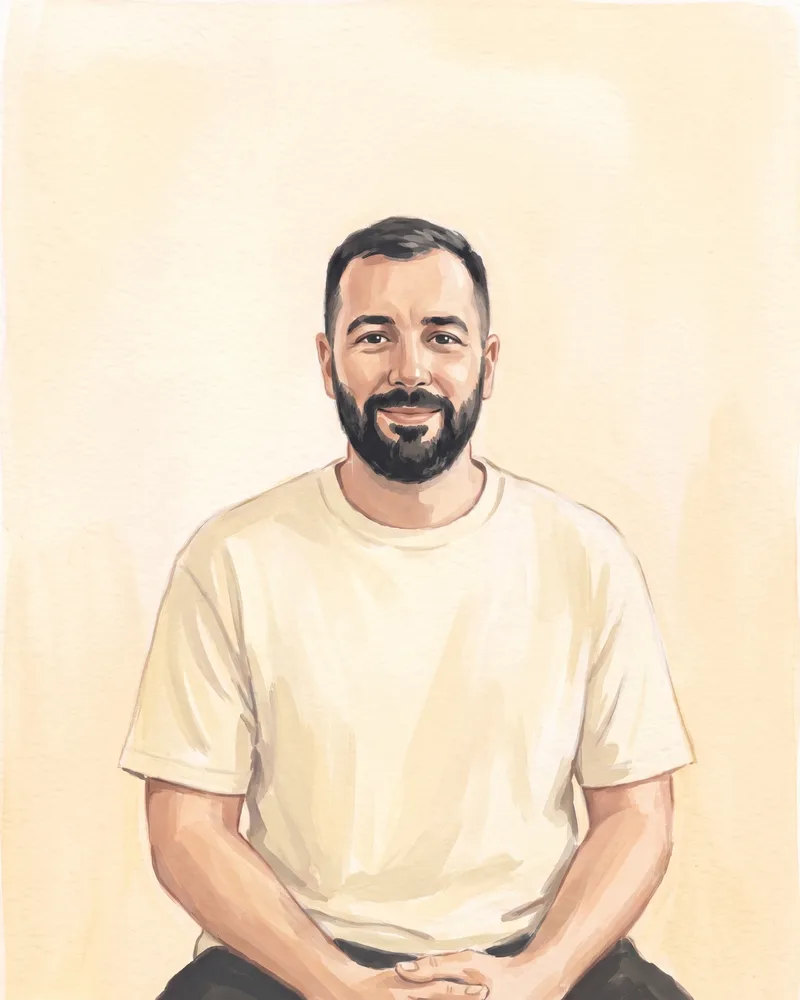
Dmytro Kompanets
Co-founder · CEO
Dmytro has been writing software for more than twenty years, and for most of that time the interesting question was never which technology to use.
He has built for Silicon Valley startups and for some of the largest companies in the world — automation, robotics, industrial systems, and lately AI. The work moved across enough different fields that the pattern became obvious to him: the technology is rarely the hard part. Deciding what to point it at is.
Outside the work, his own answer to that had been the same since he was young. He has helped children's homes and children in need for as long as he has been able to, and he is unsentimental about why: he believes the future of a society is decided by the generation currently growing up inside it, and that the tools now exist to give that generation a better start than the last one had.
Then he became a father, and the two halves met.
What he wanted for his own children did not exist. Not another library of stories that happened to be for children, but a story built for one particular child — for the fear she has this month, the sibling who arrived last week, the feeling she cannot name yet — and made well enough that she would ask for it again tomorrow. Every part of that was buildable. Nobody had built it.
Mainory is what he built instead of waiting. He is its founder and CEO, and the person responsible for the unglamorous half of the promise: that a tale arrives in minutes rather than weeks, that it reads like a book rather than a machine, that it can be read, listened to or held in print — and that a child's photograph, name and voice are handled the way he would want his own child's handled.
He is a tinkerer by temperament, and would call himself a technology geek long before he called himself an executive. What he is certain of is narrower and steadier than that: with the tools available now the world can be made better, and the most useful place to start is with the people who will inherit it.